
In a world of increasingly complex global supply chains, total visibility has become a strategic priority. Logistics and sourcing executives in the retail sector face mounting challenges when it comes to monitoring the flow of goods, ensuring regulatory compliance and responding quickly to disruptions. A lack of traceability creates the risk of delays, unexpected costs and customer dissatisfaction. A transparent chain that is connected from end to end, by contrast, makes it possible to anticipate problems and make informed decisions quickly. In fact, most experts agree that improving end-to-end visibility is no longer optional: supply chain leaders believe that "control tower" capabilities will be fundamental to business growth and to a better customer experience.
What is a "Control Tower" in the supply chain?
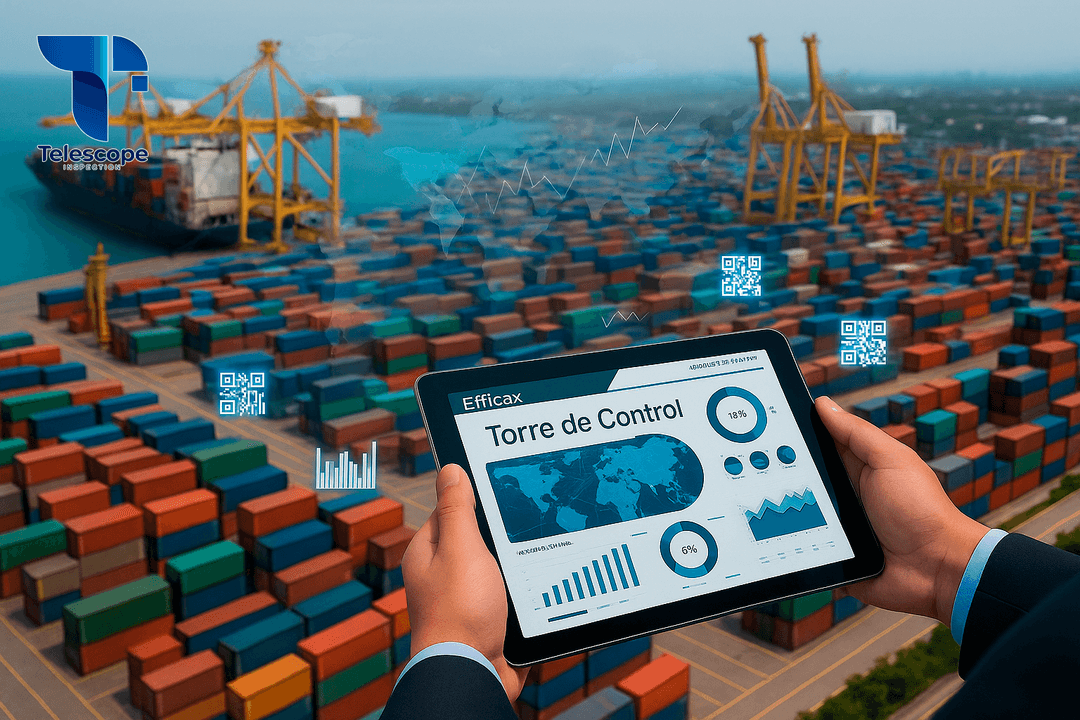
A supply chain control tower (Supply Chain Control Tower) is a centralized digital platform that gathers operational data in real time, records key events and provides comprehensive visibility of the logistics chain. This panoramic view allows executives to know, in detail, about any incident affecting the flow of goods, to set the right priorities and to solve problems in real time. In essence, the control tower acts as a unified command center that brings together people, processes and technology across the entire chain.
Modern control towers leverage advanced technologies – such as artificial intelligence, the Internet of Things (IoT), machine learning and cloud computing – to unify scattered data and turn it into actionable information. Their purpose is to continuously collect data from across the business ecosystem (suppliers, factories, carriers, warehouses, stores) and deliver in-depth analysis that improves tactical and strategic decision-making. Through customizable dashboards, a control tower provides live visibility into the status of every order or shipment, enabling proactive management. This helps make the supply chain more agile, collaborative and customer-centric, able to anticipate disruptions and adapt quickly to change.
It is important to note that today's control towers go well beyond monitoring transportation. There are specialized implementations for a range of functions: logistics and shipment tracking, order fulfillment, inventory control (preventing stockouts), securing the supply of critical inputs, and even an end-to-end control tower covering every internal and external process. In every case, the common denominator is full transparency of information and the ability to coordinate action among multiple players in the chain.
Artificial intelligence: from reacting to predicting
Artificial intelligence (AI) has become the engine behind the world's most agile, profitable and resilient supply chains. Traditionally, logistics managers reacted to problems once they had already happened —a port delay, a stockout, an unexpected demand spike—. Today, AI makes it possible to get ahead of events. Thanks to predictive analysis of large volumes of data (historical orders, market trends, weather, news), algorithms can identify patterns and anticipate shifts in demand with great accuracy. That translates into more accurate planning and optimized inventory levels, cutting storage costs and avoiding shortages.
The benefits of applying AI to the supply chain are already tangible. In 2025, companies pioneering the use of AI report 18% reductions in demand forecasting errors, 15% increases in on-time deliveries and incident response times that are 25% faster. These improvements are not marginal; in fact, they represent multimillion-dollar savings, faster planning and a significant competitive advantage. AI not only speeds up decision-making, it can also automate actions (reordering stock, rerouting shipments, proposing optimal routes), freeing human teams to focus on strategy.
Another critical contribution of artificial intelligence is early risk detection. Intelligent systems continuously monitor external variables —from geopolitical shifts to weather data— and issue alerts about events that could affect logistics (strikes, natural disasters, pandemics). With those signals, companies can activate contingency plans before a disruption spreads across the entire network. In short, AI turns the supply chain from a reactive model into a proactive one, where decisions are based on real-time data and prescriptive analytics rather than guesswork.
Blockchain: guaranteed trust and traceability
While AI brings foresight and automation, blockchain technology brings trust, security and transparency to every transaction in the chain. A blockchain is essentially a decentralized, immutable digital ledger that securely records events (inventory movements, transfers of custody, certifications, and so on). Once a record is added to the chain of blocks and validated, it cannot be altered, creating a single source of truth shared by all authorized participants.
In supply chains, blockchain provides a solid foundation for full traceability of products: it makes it possible to verify the authenticity of goods, track every item from origin to destination, and ensure that controls are met (for example, storage conditions such as the correct temperature). The tamper-proof nature of this technology helps companies demonstrate that they comply with regulations and quality standards, while buyers and partners can get a clear picture of where the goods are as they move through each stage of the journey. In the event of a return or a product recall, blockchain makes it easy to quickly identify which lot is affected and where it is, preventing further damage.
A key benefit is that blockchain reduces fraud and errors by providing real-time visibility into the movement of goods. All participants work from a common, reliable record, minimizing discrepancies caused by missing or altered data. For the supply chain, this translates into transparency, security and comprehensive tracking of operations, connecting every player in the process. A single digital ledger maximizes visibility by creating transparent updates at every stage and ensuring that each record remains unchanged; it also issues immediate alerts about delays, damage or other problems, enabling rapid response plans. Put simply, blockchain establishes trust between parties that may not know one another (manufacturer, carrier, importer, retailer), removing the need for intermediaries to validate information.
First mile and Telescope's Previo en Origen: visibility from the very start
Achieving end-to-end visibility means not overlooking the first link in the chain: the origin. This is where the concept of Telescope's Previo en Origen becomes relevant, a strategic innovation for importers and retailers. Previo en Origen (Container Loading Inspection) consists of reviewing and verifying the goods at the point of origin (the supplier's factory or warehouse), before they are shipped, making sure they meet the agreed specifications as well as the applicable rules and regulations. In other words, it is a comprehensive inspection in the country of origin that validates everything from product quantity and quality to packaging, labeling and documentation, before the cargo leaves for its destination.
Building this control into the first mile delivers immediate benefits. Discrepancies or defects are detected in time, so they can be corrected at origin instead of turning into surprises on arrival. For example, if part of the requested quantity is missing, or if the labeling does not comply with the destination country's standards, the supplier can fix it before loading, or the importer can take whatever action is needed to resolve the issue at the port of entry, as they see fit. This prevents customs delays, fines and even the rejection of goods at destination for non-compliance. A robust Previo en Origen program such as Telescope's ensures that the goods shipped are correct and ready for fast import clearance on arrival. The result is a far more reliable and efficient chain from the very first moment.
From an operational standpoint, Telescope's Previo en Origen dramatically reduces the risk of returns and post-delivery claims: by catching regulatory non-compliance or shortages before shipment, the costs of rework or replacement at destination are avoided. It also speeds up customs clearance, because when the cargo arrives the importer already has complete, validated documentation, making it easier to release containers from customs without additional delays. Another key benefit is optimized logistics planning: with advance visibility into the status of each lot before it sails, the importing company can adjust its transportation and warehousing plans ahead of time, minimizing last-minute surprises (rescheduled routes or insufficient warehouse space, for instance). All in all, origin inspection acts as a regulatory and compliance filter that mitigates risk and gives the importer peace of mind.
Strategically, the information gathered in each origin inspection becomes valuable intelligence for the business. Supplier performance data (incident rates, history of non-compliance, production delays) can feed dashboards and analytical reports. This allows purchasing managers to identify patterns, single out the most reliable suppliers and make sourcing (supplier search and management) decisions based on facts and not on price alone. Over the long term, implementing Telescope's Previo en Origen strengthens supplier relationships – because there is constant feedback on their performance – and protects the retailer's reputation by ensuring that only compliant, safe products reach the stores.
Telescope Inspection's innovations in visibility and control
Telescope Inspection, a pioneer in first mile solutions, has introduced innovations that take supply chain visibility to the next level. By combining its experience in international inspections with state-of-the-art digital tools, Telescope gives importers and retailers a single window for controlling their operations from origin to destination. Its main innovations and specialized services include:
• Global coverage and local knowledge: With more than 15 years leading origin inspections in Asia (China, India, Bangladesh and Vietnam, among others) and a presence in Europe and Latin America as well, Telescope has a team of highly experienced inspectors. This global network guarantees knowledge of local regulations and regional practices, allowing the company to respond quickly to client needs in the main manufacturing hubs. The company also focuses on large importers in sectors such as retail, fashion, electronics and toys, with an in-depth understanding of their specific requirements (local-language labeling, technical standards such as NOM in Mexico, health certifications, and so on). This ensures a service tailored to the demands of each market and product.
• Efficax System: digital traceability with blockchain and AI: Telescope developed its own technology platform, called Efficax, an information management system based on blockchain technology and artificial intelligence. Every origin inspection activity – checks performed, photos and videos taken, test results, certificates issued – is recorded in Efficax in a complete and immutable way. Thanks to blockchain, the data from each inspection cannot be altered and is permanently available to the authorized client. This delivers full traceability: the importer can check the status and outcome of their inspections at any time, from any device, knowing that the information is reliable and has not been modified. Depending on the client, the application of AI can also process and analyze this mass of data to identify trends or anomalies automatically.
• World-class information security: To guarantee the confidentiality and availability of client data, Telescope Inspection implements robust security measures. The blockchain architecture of Efficax ensures that inspection records cannot be manipulated and that only authorized personnel can access them. In addition, the company holds international certifications in quality management and information security, demonstrating its commitment to the highest data protection standards. Executives can rest assured that their sensitive data (commercial documents, product specifications, laboratory results, and so on) is safeguarded under world-class protocols.
• Dynamic visibility dashboards: In line with the control tower concept, Telescope provides digital tools for monitoring the progress of every inspection and shipment. Through interactive online dashboards, logistics and purchasing managers can see in real time how origin inspections are advancing, which checkpoints have already been cleared and any anomaly detected during the process. These dashboards include key performance indicators, charts and customized alerts. The platform also allows detailed reports of each inspection to be downloaded, consolidating the information and eliminating the delays associated with paper reports and fragmented communication. This digital control tower empowers importers with an unprecedented level of visibility over their first mile.
• Data analysis for strategic decisions: Beyond the standard inspection report, Telescope can generate strategic insights from the data collected. It produces supplier trend reports, documentary compliance histories and performance statistics by product and factory. This operational intelligence helps supply chain directors identify patterns, prioritize reliable suppliers and plan continuous improvements. Instead of relying solely on reacting to problems, Telescope's client gains a preventive, strategic view of their sourcing, drawing on hard data to make decisions.
Taken together, these innovations position Telescope Inspection as a key ally for companies looking to modernize their supply chain. By contracting services such as Telescope's Previo en Origen integrated with digital platforms, executives achieve greater control, efficiency and confidence in every shipment from the moment it leaves the factory. It is about transforming a traditional process (cargo inspection) into a comprehensive first mile solution that adds value and total visibility along the entire logistics journey.
Benefits for importers and retailers
Implementing a total supply chain visibility strategy – combining control towers, AI, blockchain and origin controls – brings multiple concrete advantages for importers and large retailers. Among the key benefits executives see when they adopt these innovations, the following stand out:
• Lower costs and risks: By identifying and correcting deviations at the factory, costly returns, penalties and inventory losses at destination are avoided. Financial and reputational risks also fall, since the company is not exposed to delivering defective or non-compliant products to the end market.
• Logistics and customs agility: With information and documentation verified in advance, import procedures run smoothly. Shipments meet regulatory requirements from origin, resulting in faster customs clearance with no unforeseen delays. This shortens import cycles and makes it possible to deliver to stores on time, even in peak seasons.
• Inventory optimization: Knowing exactly how the quantities were fulfilled and what issues were found in the products already on their way makes it possible to fine-tune inventory planning. Companies can better anticipate incoming stock levels, avoiding stockouts caused by undetected shortages or, conversely, an excess of unsellable goods due to defects. Upstream visibility translates into less tied-up capital and more efficient turnover.
• Assured regulatory compliance: Integrating quality and compliance controls (labeling, certificates, applicable standards) from the first mile guarantees that every imported lot meets the destination country's regulations. This eliminates spending on rework or fines for non-compliance and protects the retailer's license to operate before health, customs and industrial property authorities.
Ultimately, achieving total visibility at a reasonable operating cost delivers a very high return on investment. Gains in efficiency and problem prevention not only save money, they also free up staff time to focus on growth initiatives. It is no coincidence that the most advanced supply chain companies are reaping substantial benefits: fewer errors, more on-time deliveries and a reputation for reliability that sets them apart in the market. These are not minor advances but substantial gains that translate into faster planning and sustainable competitive advantages.
Toward 100% transparent supply chains
The combination of emerging technologies and innovative practices is taking supply chains into a new era of total visibility. For import, logistics and sourcing executives in retail, having that visibility is no longer a futuristic luxury but a present-day necessity in order to compete. Tools such as digital control towers, artificial intelligence and blockchain systems, together with origin inspection services like those of Telescope Inspection, are resolving the chain's long-standing "blind spots" at an affordable cost compared with the value they generate.
Organizations that adopt these comprehensive solutions will be able to navigate volatile environments with greater resilience: they will detect any anomaly in time, guarantee the quality and compliance of their products, and respond with pinpoint speed to market demands. By contrast, those operating with limited visibility and unreliable partners (such as sourcing companies that pass themselves off as independent inspection firms) will remain exposed to unpleasant surprises, inefficiencies and avoidable risks.
In conclusion, moving toward a supply chain that is 100% transparent, traceable and controlled in real time is the way forward for large importers and retailers that aspire to stand out in the global environment. Thanks to the synergy of AI, blockchain and "control tower"-style platforms, supported by first mile experts such as Telescope Inspection with its Efficax System, it is now possible to keep an eye on every link in the chain. And when you have total visibility, you also gain control: the business stops reacting to events and starts anticipating them, turning logistics into a strategic enabler of business success.