
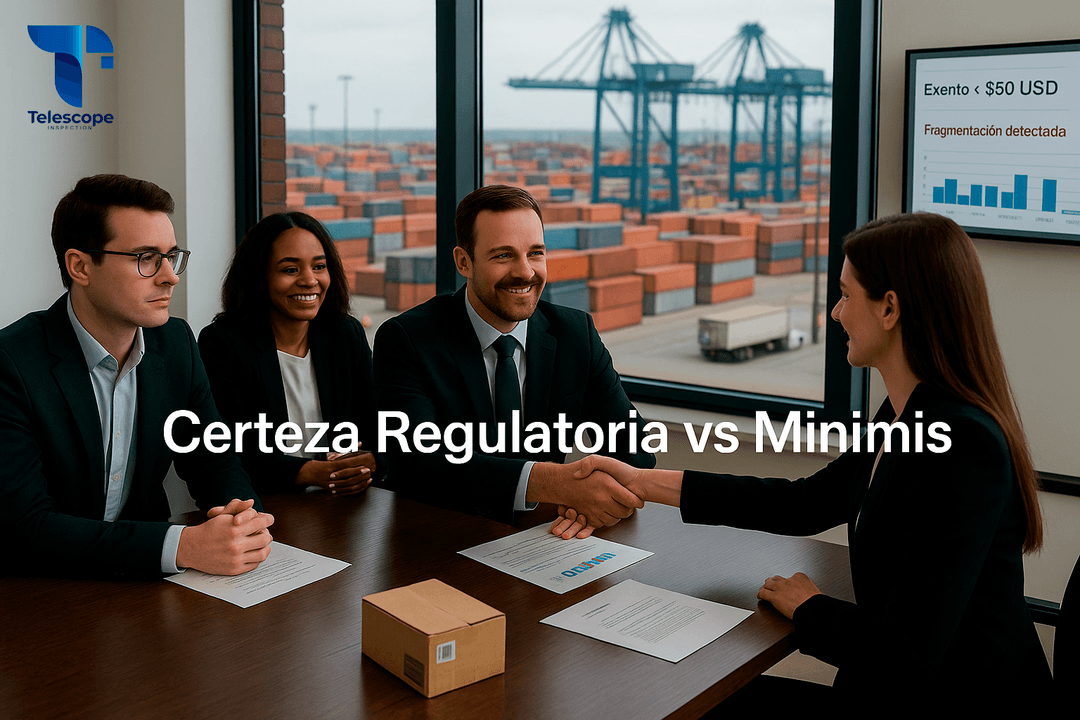
What is the “de minimis” regime and how does it affect the Mexican market?
The “de minimis” regime is a tariff provision that exempts low-value shipments from import taxes and duties. In Mexico, this threshold was set at USD 50 for goods originating in countries without a trade agreement, and at USD 117 for shipments from the United States or Canada under the T-MEC (USMCA). The scheme made it easier for small parcels to enter the country, encouraging direct-to-consumer international purchases without the costs of a conventional import operation.
In practice, however, this mechanism has created significant distortions. By allowing a wide range of products (apparel, toys, household goods, electronics, and so on) to enter tax-free, entire market segments have been flooded with low-cost items. Business chambers and government authorities warn that such excessive use of the de minimis regime causes losses in tax revenue (because of the exemption) and unfair competition against domestic producers and retailers who do pay the corresponding duties and VAT and who comply with the applicable standards and regulations of the Mexican market. In many international supply chains, companies break shipments up to stay within this limit (“splitting”), taking advantage of the fact that an order divided into several small parcels can enter duty-free — a practice that distorts formal trade.
The de minimis scheme has also raised regulatory concerns: low-value parcels are usually exempt from the health inspections or certifications (NOM) that apply to formal imports. This means that some goods may reach the consumer without meeting labeling, health or safety standards, which worries productive sectors and authorities alike. Overall, the broad application of the de minimis regime had fostered fast cross-border digital commerce for consumers, but at the cost of altering the competitive rules of the game and reducing expected tax revenue.
Unfair competition from international digital platforms
Global e-commerce platforms (online sales) have been identified as the main beneficiaries of the de minimis regime. Foreign online retailers have been able to offer very low prices to Mexican consumers because, through irregular practices, they avoid paying taxes. Chief among these practices are undervaluation (declaring a price lower than the actual one in customs documents) and order splitting (dividing a single shipment into small parcels to fall below the USD 50 threshold). The Mexican customs authority considers that these acts — common on some Asian-based portals — amount to improper manipulation of foreign trade operations.
This situation has a direct impact on formal domestic merchants. When compared with imports on which no duties or VAT are paid, suppliers that operate with pedimentos (customs declarations) and complete accounting records face an artificial increase in costs. The result is an uneven playing field: imported products can be placed on the market at lower prices, forcing Mexican companies to cut margins or lose sales. Authorities have also warned that undocumented or misdeclared imports may include goods that fail to meet official standards (for example, items without certification or that pose health risks).
To curb this unfair competition, in 2024 the government amended the foreign trade rules. The new regulation explicitly defines the splitting of orders to evade taxes as an “improper practice”. In practical terms, it makes clear that platforms and courier companies that manipulate shipments — dividing a larger parcel into multiple consignments below USD 50, or assigning false values — commit serious violations that may lead to seizure of the goods, fines and criminal penalties. In this way, the effort to level the playing field seeks to prevent international players from gaining advantages by failing to comply with the national customs legal framework.
Tariff and tax reforms to level the playing field
To correct the distortions described above, the Mexican authorities have implemented joint reforms in tariff and tax matters. In June 2024, the first amendment to Annex 5 of the General Foreign Trade Rules (Reglas Generales de Comercio Exterior, RGCE) was published, strengthening oversight of cross-border e-commerce. This reform expressly prohibits the splitting of shipments in order to take advantage of the de minimis regime. In other words, any attempt to send goods in multiple parcels to avoid paying the General Import Duty (Impuesto General de Importación, IGI) and VAT will be treated as customs fraud.
On the tax side, the most important reform was the publication of the 2025 Miscellaneous Tax Resolution (Resolución Miscelánea Fiscal 2025), which took effect on January 1, 2025. This document sets new tax rates for low-value imports. In essence, the vast majority of small shipments will start paying taxes. Under the recent rules, parcels coming from countries with trade agreements will pay a flat rate of 19% if they exceed certain amounts (for example, above USD 50, with the exception of T-MEC shipments between USD 50 and USD 117, which pay 17% where applicable). Meanwhile, any import from countries without a trade agreement in force will pay 19% in duties plus VAT regardless of the amount. In practice, this almost entirely eliminates the de minimis tax exemption: only very small shipments would remain exempt, typically those for personal use and not subject to special regulations.
These reforms mean that, as of 2025, nearly all international shipments will be subject to import taxes. In addition, documentary and data controls have been tightened for those handling international shipments. For example, courier companies must now collect comprehensive information on the consignee (name, RFC tax ID, address) and are required to register with the SAT (Mexico’s tax administration service) if they facilitate online sales. Accordingly, intermediaries in the supply chain (platforms, courier firms and customs brokers) must act as jointly and severally liable parties for the payment of contributions when they take part in irregular imports. These measures aim both to simplify compliance for genuine importers and to increase revenue collection, reducing avoidance and smuggling in international e-commerce.
Current obligations of formal importers
In this scenario, importers that operate formally face a new and clearly defined set of obligations. First, every individual or legal entity importing goods must be registered in the SAT’s Importers’ Registry (Padrón de Importadores) — or the exporters’ registry, as applicable. This ensures that they hold an active RFC tax ID and are subject to tax obligations. When bringing a shipment into the country, the importer must file a detailed electronic pedimento (customs declaration), together with the actual commercial invoice and other supporting documents. The pedimento declares the commercial value, the applicable tariff classification under the Schedule of the General Import and Export Duties Law, and the applicable regulatory and restrictive measures (for example, NOM standards, quotas, permits).
The formal importer is required to pay the General Import Duty (IGI) and the corresponding customs VAT on its goods. Only personal duty-free allowances of up to USD 50 that are not subject to special regulations remain exempt. By contrast, any shipment whose value exceeds that threshold can no longer rely on the de minimis allowance and must pay customs duties. For instance, an online purchase of USD 100 will not qualify for the minimum exemption, so the lawful importer will have to pay the ordinary duty and VAT on those goods.
Importers must also make sure they comply with all official standards applicable to their products. Non-Tariff Regulations and Restrictions (RRNA) require compliance with safety standards, health labeling, official certifications and the like. Even a shipment below USD 50 would lose the exemption if it includes goods subject to special regulations. It is therefore the importer’s responsibility to verify that its goods have the corresponding permits (SAGARPA, COFEPRIS, PROFEPA, etc.) before importation.
In day-to-day operations, this means keeping accurate accounting and documentary records of every transaction. The importer must retain invoices, pedimentos, bills of lading and any other files supporting its tax filings, since the authority may request them during audits. It must likewise comply with e-commerce provisions (such as electronic invoicing and VAT refunds to foreign nationals where applicable). In short, the new environment requires formal importers to operate in strict compliance with the customs and tax rules in force, avoiding any practice that could be construed as evasion (for example, undervaluing goods or altering documentation).
Strategic recommendations for the new regulatory environment
Retail companies and formal importers must adapt their commercial and logistics strategy to the new framework. Below are some key recommendations for operating successfully:
• Strengthen internal compliance: Implement rigorous protocols for documentary verification and valuation. This includes automated systems (ERP) that ensure invoices are recorded correctly, tariff classification is accurate and IGI/VAT calculations are correct. Training logistics and customs staff on the latest rules prevents errors when preparing pedimentos.
• Consolidate and plan shipments: Whenever possible, group goods from the same supplier to optimize customs costs. A larger volume can justify a formal entry, with handling advantages (regime changes, seizures) over a fleet of undervalued shipments. Avoid deliberately splitting shipments for tax purposes, as this may constitute an improper practice.
• Maintain solid relationships with logistics partners: Work with reliable customs brokers, shipping lines and courier companies that offer transparency throughout the import process. A professional logistics partner helps manage import permits (health, environmental, etc.) and comply with non-tariff regulations, reducing delays and fines.
• Invest in traceability and technology: Adopt tracking tools that integrate the full journey of the products. For example, use digital platforms to monitor shipments, inventories and compliance alerts in real time. Emerging technologies such as blockchain can guarantee the integrity of import documentation, preventing improper alterations.
• Review pricing and supplier strategy: Given the increase in tax costs, it is important to restructure selling prices or commercial agreements. Negotiate with international suppliers so they may absorb part of the duties or adjust prices. Also assess local production or sourcing alternatives for key components, taking advantage of geographic proximity and avoiding import taxes.
• Comply with e-commerce regulations: If you sell online, it is essential to build tax compliance into the platform. This means informing customers about import taxes, realistic delivery times and warranty policies. Likewise, if digital marketplaces are used, verify that they withhold the corresponding taxes (VAT) as required by law.
• Monitor regulatory trends: Stay alert to new regulatory changes (tariffs, rules of origin, international agreements). Taking part in foreign trade chambers and associations can help you anticipate changes and influence legislation through proposals.
By implementing these measures, companies reduce the risk of fines and seizures and secure a more efficient flow of goods. In the long run, operating in full compliance with the rules strengthened by these reforms will build confidence among business partners and improve corporate reputation with customers and authorities alike.
Telescope Inspection: a key partner in compliance, traceability and innovation
In this new context, having specialized monitoring and compliance solutions is essential. Telescope Inspection positions itself as a strategic ally for importers and retailers that need to guarantee customs compliance from origin to destination. Its Origin Inspection service (Previo en Origen) consists of physically verifying the cargo at the foreign supplier’s warehouse before shipment. This makes it possible to confirm that the goods are fully compliant with Mexican customs laws and regulations (tariff classification, labeling requirements, requested quantity and quality). By ensuring conformity from the very first moment, the risk of rejections or delays at customs is reduced, optimizing import lead times.
Telescope Inspection also brings in an advanced digital platform — the Efficax System — built on blockchain technology and artificial intelligence. This system records every step of the logistics cycle (inspection, container loading, transportation, final delivery) in an immutable ledger, accessible online from any device. Thanks to blockchain, the integrity and security of the information are guaranteed: users can consult reports and evidence (photographs, documents) in real time. This ensures full traceability of shipments, which is critical given today’s level of customs scrutiny.
Telescope also promotes the digital transformation of the supply chain. Its tools integrate inventory, transportation and documentation management into a single optimized flow. For example, when using the platform, the client receives notifications of any regulatory non-compliance detected, and can download detailed reports that make it easier to file pedimentos. Together, these technological capabilities deliver greater efficiency, transparency and innovation in logistics operations.
As a result, companies that work with Telescope Inspection gain a comprehensive partner that goes beyond a simple physical inspection: it provides regulatory compliance services, traceability, operational risk analysis and transparency from origin that help anticipate risks. This allows retail executives to focus on their core business, knowing that their supply chain complies with the rules in force and is backed by solid support and complete evidence. The combination of experience and technology-driven solutions makes Telescope Inspection a valuable ally for navigating the new regulatory environment with confidence.
Benefits of formal foreign trade and outlook
The adaptation of the Mexican regulatory framework to address abuse of the de minimis regime is reshaping the competitive foreign trade environment for the better. By eliminating blanket exemptions and penalizing bad practices, the playing field is being leveled for formal companies. In the short term, this means that domestic retailers and producers will be able to compete on efficiency, quality and innovation — instead of being displaced by artificially low prices. At the same time, public finances will recover part of the revenue previously forgone, strengthening tax collection without raising general tax rates.
For the retail sector, operating under a more transparent foreign trade regime offers key benefits: greater legal certainty in the supply chain, a reduction in informal practices and positive differentiation before consumers who are increasingly attentive to the quality and legality of products. In the medium term, the digitalization of customs processes is expected to continue (with initiatives such as integrated electronic invoicing for imports and a universal e-Pedimento), along with more sophisticated control mechanisms (artificial intelligence in cargo selection, blockchain for certificates, and so on). These trends drive a more resilient and traceable logistics chain.
Finally, the outlook points to a Mexico with a stronger and more competitive formal foreign trade sector. Alignment with international best practices and growing investment in regulatory technologies mean that the country will move toward faster, more secure customs processes. For retail companies, this translates into growth opportunities in global markets, brand strengthening and greater trust from their customers. Taken together, the entry into force of these regulatory changes paves the way for fairer, more modern foreign trade, to the benefit of the Mexican economy and of the market’s responsible players.