
Current challenges and proactive customs compliance
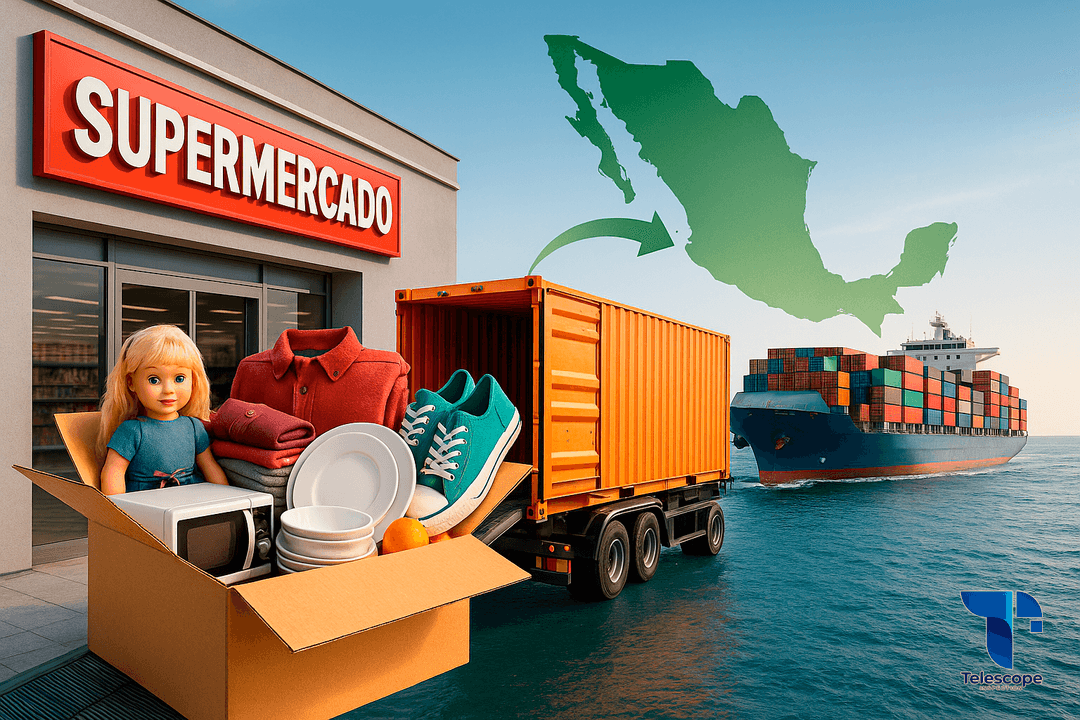
Mexican foreign trade operates in a dynamic and complex environment. Importers in Mexico must deal with changing regulations, extensive documentary requirements and strict customs procedures. Each type of product may be subject to specific Normas Oficiales Mexicanas (NOM, Mexican official standards), import permits, safety or sanitary certifications, among other formalities. In practice, these requirements can translate into delays at the port, additional storage costs and significant uncertainty when the time comes to clear the goods for import. On top of that, with the growth of international trade and the expansion of the Mexican market, customs authorities have stepped up enforcement: a single error in the documentation or in the labeling can result in heavy fines or even in the cargo being held at customs.
Against this backdrop, adopting a proactive customs compliance approach has become essential to stay competitive. Instead of reacting to problems once the cargo has arrived in Mexico, successful companies anticipate and manage risk at origin. This means verifying in advance that their products meet every legal and regulatory requirement, avoiding costly surprises on arrival. The premise is simple: it is far better to detect and correct a non-compliance at the factory than to face it at Mexican customs, where deadlines, costs and penalties escalate quickly.
One of the most complete answers to these challenges is Previo en Origen (Container Loading Inspection), an inspection and verification service performed before the goods are shipped to Mexico. In the sections below we will look in detail at what Previo en Origen is, how it fits within the Mexican legal framework, and why it is such a valuable tool for importers and customs brokers seeking to speed up their operations and guarantee regulatory compliance.
What is Previo en Origen?
Previo en Origen is a form of inspection prior to customs clearance, carried out in the country of origin before the goods are shipped to Mexico. In essence, a Previo en Origen means sending specialized inspectors to the factory or to the cargo consolidation site in order to physically verify the products and review the corresponding documentation, making sure that everything complies with Mexican customs and regulatory requirements before the merchandise leaves the foreign country. It is an end-to-end control that covers aspects such as:
- Physical condition and quality of the products: The goods are inspected to confirm that they match what has been declared, that they show no damage and that they meet the agreed specifications. Unlike a traditional quality inspection focused solely on product defects or functionality, Previo en Origen also assesses whether the product meets mandatory standards (for example, safety standards, NOM labeling, expiry dates on food products, etc.).
- Quantity and packing: Quantities are checked against the invoice and the packing list, and the packaging is reviewed to confirm that it is adequate to protect the cargo. The contents of the container are also verified against what is stated in the documentation.
- Documentary and regulatory compliance: The inspector reviews every document (invoices, packing lists, certificates, permits) to make sure they are in order and comply with the applicable Mexican regulations. For example, if a product requires an import authorization or prior permit, the existence of that document is confirmed. Product labeling is likewise checked against the corresponding NOM before shipment.
It is important to stress that Previo en Origen is not simply a conventional quality inspection. Although it incorporates quality checks, its main objective is to guarantee customs compliance. A typical quality inspection may focus on the buyer's own criteria (finishes, functionality, product presentation), whereas Previo en Origen also covers legal conformity: it ensures that the product and its documentation are ready to pass the customs filter in Mexico without setbacks. In other words, Previo en Origen combines customs compliance control + regulatory verification + relevant information on loading conditions.
Within the Mexican legal framework, Previo en Origen is grounded in the principles of the Customs Law (Ley Aduanera) and its regulations, which require imports to be supported by accurate information and by goods that match what has been declared. Although the Customs Law provides for customs examination (physical inspection at the port) as a verification mechanism, Previo en Origen moves that verification abroad as a preventive measure. The practice is aligned with trade facilitation policies: the customs authority allows faster clearance (what is even referred to as "advance clearance") when the customs broker has evidence that the goods have already been inspected and are fully compliant. In fact, with a Previo en Origen it is feasible for shipments to be released within 24 to 48 hours of arrival at a Mexican port, since a thorough inspection at destination is no longer necessary. Previo en Origen has gained ground in recent years; it is one of the fastest-growing import schemes in Mexico over the past decade and a half, thanks to the tangible benefits it delivers in time, cost and certainty.
Differences from traditional quality inspections: Finally, it is worth summarizing the key difference between a Previo en Origen and a typical quality control inspection: the legal scope. While a quality inspection may be carried out by the buyer to validate product aspects according to its own internal criteria, Previo en Origen operates under official standards and in coordination with the customs broker, with a view to complying with Mexican legislation. The resulting Previo en Origen report has operational validity in customs clearance, unlike a standard quality control report, which mainly serves internal commercial purposes. In short, Previo en Origen adds a layer of legal and customs verification to the inspection process at origin, providing peace of mind on both product quality and documentary conformity.
Operating with vs. without Previo en Origen: scenario comparison
To appreciate the value of Previo en Origen, it is useful to contrast an import operation with Previo en Origen against one without Previo en Origen. Below is a comparison summarizing the differences in terms of compliance, lead times, costs and risks:
· Previo en Origen: The Strategic Difference in Your Imports
When a Mexican company imports goods, making sure the customs process is fast, cost-effective and free of setbacks is essential. The Previo en Origen service makes a decisive difference compared with operations that have no prior verification.
· Regulatory compliance
With Previo en Origen, the goods are validated in the country of origin against Mexican regulations: NOM labeling, permits, certificates and complete documentation. The shipment only leaves once everything is in order, which prevents costly errors on arrival in Mexico such as relabeling, document corrections or returns. Without this service, compliance is not reviewed until the goods reach customs. If there are failures (missing labels, incomplete documentation or tariff classification errors), they are detected too late, generating delays and high correction costs.
· Clearance times
With inspection at origin, the cargo can be released quickly on arrival in Mexico. No physical inspection at customs is required, which allows clearance to be completed within 24 to 48 hours and speeds up delivery. Without this verification, clearance becomes uncertain. The goods may be selected for customs examination, with containers being opened and days or weeks of delay added.
· Operating costs
Previo en Origen helps to control and reduce costs. By preventing holds, it eliminates extended storage charges, container demurrage, additional handling and penalties. Costs become predictable and the operation more profitable. Without inspection at origin, additional costs are common: storage, demurrage, handling and fines. This makes the product more expensive and undermines its competitiveness.
· Risks and contingencies
With Previo en Origen, customs risks are practically eliminated. Everything has been reviewed, which provides logistics certainty and minimizes the possibility of penalties, seizures or legal disputes. Without this tool, there is a risk of irregularities: documentary discrepancies, errors in value or undeclared goods. This can lead to fines, seizure of the cargo, legal proceedings and even the total loss of the shipment.
As the comparison shows, Previo en Origen acts as insurance on the accuracy of the reported information and on compliance before the goods begin their journey. Operating without this filter means navigating the import process "blind", simply trusting that no problems will arise; by contrast, operating with Previo en Origen delivers full visibility and control over compliance from the very start. We will now look at the specific benefits this practice brings to the different players in the chain: importers and customs brokerage firms.
Benefits of Previo en Origen for Mexican importers
For importers in Mexico, Previo en Origen offers a series of concrete benefits that improve their ability to comply with the law, optimize operations and avoid losses. The main advantages include:
- Guaranteed regulatory compliance: Previo en Origen ensures that every imported consignment complies with current Mexican regulations. This includes verifying labeling against the applicable NOM, quality or safety certificates, and any special permit required (for example, sanitary permits or automatic import licenses for sensitive goods such as textiles and footwear). When the goods reach customs, the importer can be confident that everything is in order, drastically reducing the risk of incurring violations or penalties for non-compliance. In essence, the importer can "sleep soundly" knowing that the products have passed through a rigorous filter before being shipped.
- Logistics efficiency and time savings: With a Previo en Origen, release times at the port are cut to a minimum. This allows importers to plan their supply chain better, reducing uncertainty. The goods do not sit for long periods held at customs; instead, they can move on to distribution within 24–48 hours of arrival. Logistics become far smoother, avoiding opportunity costs from detained cargo. In addition, because inspections at destination are no longer required, unnecessary operational steps are eliminated, speeding up delivery to end customers or to production lines in Mexico.
- Traceability and transparency: Modern Previo en Origen services typically rely on digital platforms to record findings and incidents. The importer has real-time information about the inspection at origin: they know exactly what was reviewed, what was found, and they receive a detailed report with photographic evidence. This full traceability means there is a documented chain of custody for the goods from origin to destination. Any authorized party (importer, customs broker and even the authorities if necessary) can consult the history of the shipment. This not only builds trust, it also facilitates internal and external audits. Telescope Inspection goes further and applies blockchain technology to record inspection reports, so that the information is immutable and even more reliable in terms of data integrity.
- Fewer penalties and unforeseen costs: By detecting and correcting errors before shipment, customs fines in Mexico are avoided. It is worth remembering that penalties for omissions or incorrect data on a pedimento (customs declaration) can be onerous. For example, a missing mandatory data field or an incorrect tariff classification can lead to fines ranging from thousands to hundreds of thousands of pesos, depending on the severity. With Previo en Origen, the importer minimizes these contingencies by virtually eliminating the possibility of errors in the declaration. Unforeseen expenses from extended storage or extra services (such as hiring bonded facilities to relabel products) are likewise avoided. This translates into significant financial savings in the medium and long term.
- Full control of the import process: Rather than depending solely on the overseas supplier or finding out about problems when the vessel is already at port, the importer using Previo en Origen takes back control of the process. They have visibility and control over the goods before they even leave the country of origin. If something is non-compliant, immediate action can be taken: instructing corrections, setting aside non-conforming goods, adjusting documents, and so on. This strengthens the importer's position with its suppliers and, in turn, fosters a culture of compliance across the entire supply chain. In the long run, this proactive stance reinforces the importer's reputation with the customs authorities and may even have a positive impact in the form of lower risk profiles and fewer random inspections.
Benefits of Previo en Origen for customs brokerage firms
The customs broker (or customs brokerage firm) is a key ally of the importer in clearing the goods. For them, Previo en Origen also represents significant advantages, since it makes their work easier and reduces the risks inherent to their profession:
- Confidence in the documentary file: When receiving a shipment with Previo en Origen, the customs brokerage firm has a complete, verified file before the goods arrive. The documents (invoice, packing list, certificates) have already been cross-checked against the actual cargo, which gives them a high degree of confidence when preparing the pedimento. In other words, the customs broker knows exactly what is in the container and in what condition, because an independent third party confirmed it. This reduces the likelihood of discrepancies between what is declared and what actually arrives, enabling fast, trouble-free clearance.
- Independent technical backing: Having a Previo en Origen report issued by a specialized company gives the customs broker additional technical backing in the face of any doubt or contingency. For example, if the authority decides to audit or review the clearance, the broker can present evidence that the goods were inspected by a recognized third party, with photographs and documented findings. This independent support adds credibility to the file and can be crucial in clearing up any misunderstanding with the authorities. Likewise, by delegating the physical inspection to experts at origin, the brokerage firm can focus its resources on documentary and tariff advisory work, knowing that the physical side has been handled professionally.
- Fewer legal contingencies: Customs brokers in Mexico bear substantial joint and several liability for compliance with tax and customs obligations. If something goes wrong in an import operation (for instance, if the goods turn out to differ from what was declared), the broker may face legal implications or penalties alongside the importer. Implementing Previo en Origen drastically reduces those contingencies, because it lowers the probability of errors or omissions. In essence, the customs broker mitigates their risk by being involved in far more transparent operations. Fewer surprises at customs mean less exposure to unintentional violations. It also improves the relationship with importer clients, offering them added value and greater security in every clearance.
All in all, for customs brokerage firms Previo en Origen translates into safer, more efficient and more reliable operations, with a positive impact on their reputation and on client satisfaction. This service complements the customs broker's work, adding an extra layer of security that protects both the importer and the broker throughout the import process.
Why Telescope Inspection is the ideal partner for Previo en Origen
When choosing a Previo en Origen service provider, it is essential to consider the company's experience, scope, coverage and technical credentials. Telescope Inspection stands out as the ideal partner for implementing Previo en Origen, backed by several key attributes:
- Proven track record and experience: Telescope Inspection has almost two decades of experience performing inspections and Previo en Origen for Mexico's leading importers and retailers. Since before 2010 it has pioneered Previo en Origen operations in the main manufacturing hubs of Asia (with particular strength and coverage in China, India, Bangladesh and Vietnam, as well as Cambodia, Indonesia, Malaysia and Thailand), becoming the first provider to offer this solution in Mexico continuously and without interruption. Its sustained excellence over more than a decade guarantees that it has faced and resolved a wide range of possible scenarios, refining its inspection protocols over time and delivering 0% INCIDENTS (ZERO INCIDENTS), which means that in more than 15 years of service, across hundreds of thousands of containers and goods inspected, there have been no failures in the information reported, no extra costs for our clients and no issues that put importers or their customs brokerage firms at risk.
- In-depth knowledge of Mexican regulations: The Telescope team has full command of the Mexican customs regulations and technical standards applicable to a wide range of products. Whether it is a labeling NOM for electronics, phytosanitary requirements for food, or customs valuation criteria, Telescope Inspection understands exactly what to look for and how to verify compliance at origin. This ensures that its inspections are 100% aligned with the requirements of the National Customs Agency of Mexico (ANAM), the Mexican Institute of Industrial Property (IMPI) and other Mexican authorities, delivering reports that are genuinely useful to the customs broker during clearance. Its multi-industry experience (textiles and footwear, perishables, toys, tableware, furniture, machinery, etc.) allows it to adapt expertly to any sector.
- Independence and objectivity: Telescope Inspection operates as an independent third party, with no commercial ties to suppliers or importers that could compromise its objectivity. This means its Previo en Origen reports faithfully reflect the condition of the goods, with no conflict of interest. For clients, that independence translates into trust: the findings reported by Telescope carry credibility in any audit or review, because they come from an impartial technical source. The company maintains strict ethical and integrity standards across all its inspections.
- Global coverage and local presence at origin: Through its offices and international network, Telescope offers coverage in the main countries of origin for Mexican imports. It has an operational presence in Asia, Europe, North America, South America and Africa, spanning more than 80 countries through its own inspectors or strategic partners. This guarantees that, wherever your products come from (a port in China, a factory in Vietnam or a supplier in Spain), Telescope can carry out the Previo en Origen inspection at the site where your containers are loaded. In addition, its cultural and logistics knowledge of each region makes coordination with local factories and suppliers far easier. Few providers offer such broad reach, which makes Telescope a comprehensive ally for companies with global supply chains.
- Technological innovation: blockchain, artificial intelligence and digital dashboard: Telescope Inspection has incorporated state-of-the-art technology tools to enhance its services. In particular, it has pioneered the application of blockchain technology in Previo en Origen and cargo inspections. Every inspection can be recorded on a blockchain, creating a tamper-proof record of results and photographs that both the importer and the customs broker can access. This delivers an unprecedented level of traceability and trust in the information: any alteration or discrepancy in the data would be easy to detect. Telescope also provides clients with an intuitive digital dashboard where they can schedule inspections, follow them in real time and download final reports. This complete digitalization of the first mile of the supply chain sets Telescope apart as a provider driven by data-based transparency and efficiency.
Telescope Inspection offers the ideal combination of experience, global reach and technology to maximize the regulatory compliance and information benefits of Previo en Origen. Its record as a pioneering leader in Previo en Origen, together with a deep understanding of the Mexican regulatory framework, gives importers and customs brokers the assurance of being backed by experts. By choosing Telescope as their partner for this service, companies can strengthen their proactive compliance, optimize costs and ensure that their international trade flows smoothly from the factory to its final destination in Mexico. A well-executed Previo en Origen program, hand in hand with a reliable partner, is today a key differentiator in the competitiveness of Mexican foreign trade.