
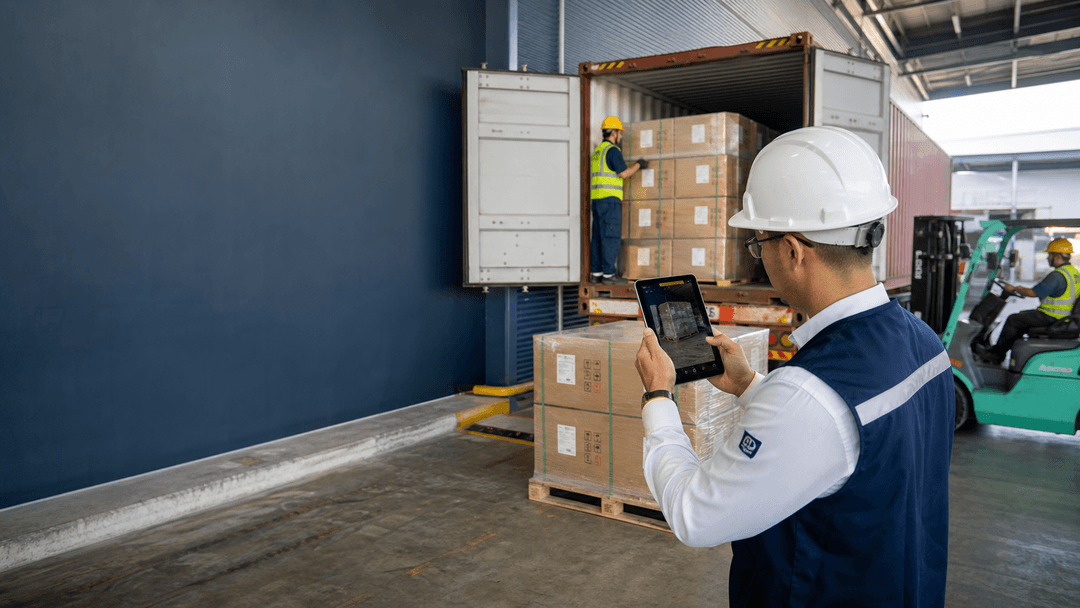
In an increasingly globalized world, supply chain efficiency has become a critical factor in the success of any company. The first mile, which runs from the production of goods to their first consolidation point, plays a crucial role in determining the overall efficiency of the supply chain. Alberto Medina, co-founder of Telescope Inspection, has submitted an innovative proposal to the UN Trade and Development (UNCTAD) Innovation Challenge, focused on the digital transformation of this key stage through the Previo en Origen service, also known as Container Loading Inspection. This article explores the details and benefits of that proposal.
In an increasingly globalized world, supply chain efficiency has become a critical factor in the success of any company. The first mile, which runs from the production of goods to their first consolidation point, plays a crucial role in determining the overall efficiency of the supply chain. Alberto Medina, head of Telescope Inspection, has submitted an innovative proposal to the UN Trade and Development (UNCTAD) Innovation Challenge, focused on the digital transformation of this key stage through the Previo en Origen service, also known as Container Loading Inspection. This article explores the details and benefits of that proposal.
The first mile in the supply chain refers to the initial leg of a product's journey, from the place of production to the first consolidation or transport point. This stage is fundamental, as it lays the groundwork for the entire logistics process that follows. Efficiency in the first mile can determine how quickly a product reaches the market, the condition in which it arrives and the costs associated with moving it.
One of the main challenges in the first mile is the lack of visibility. Many companies struggle to get a clear view of where their products are during this initial leg, which can lead to delays and errors. In addition, customs and labelling compliance requirements vary from one country to another, adding a further layer of complexity. Operational inefficiencies are also common, since many processes still rely on manual, paper-based methods, increasing the likelihood of errors and loss of information.
Alberto Medina, co-founder of Telescope Inspection, has extensive experience in the supply chain industry. Under his leadership, Telescope Inspection has become a pioneer in delivering innovative solutions for the supply chain and international trade. The company has been recognized for its focus on digitalization and transparency, which has enabled its clients to significantly improve their logistics operations.
Digital transformation involves the use of advanced technologies to improve and optimize existing processes. In the context of the first mile, this includes the use of blockchain to safeguard data integrity, IoT for real-time monitoring and data analytics for process optimization. These technologies not only improve visibility and transparency; they also enable more efficient and effective supply chain management.
The Previo en Origen service, or Container Loading Inspection, is a comprehensive solution that ensures products comply with all customs and labelling regulations before they are shipped from the country of origin. This service includes verifying the quantity and quality of the goods, checking the condition of the container and gathering all the documentation required for customs clearance.
The main benefit of the Previo en Origen service is compliance with customs regulations. This ensures that goods do not face delays or problems at the point of entry. It also improves product visibility and traceability, allowing companies to track their shipments in real time. Reduced risk and cost is another significant benefit, as the possibility of errors and losses during the transport process is minimized.
The use of blockchain in the supply chain makes it possible to record every transaction securely and immutably. This ensures that all shipment-related data, from production to delivery, is transparent and verifiable. In Alberto Medina's proposal, blockchain integration guarantees that inspection and transport data cannot be altered, providing a high level of trust and security to all parties involved.
Data analytics allows companies to analyze large volumes of information in order to identify patterns and trends. In Alberto Medina's proposal, data analytics is used to optimize inspection and transport processes, identifying areas for improvement and implementing more efficient solutions. This not only improves operational efficiency, but also reduces costs and increases customer satisfaction.
Implementing Alberto Medina's proposal has the potential to significantly improve supply chain efficiency. By digitalizing the first mile, companies can shorten processing times and increase the accuracy of their operations. This translates into faster time to market and lower operating costs.
Digitalizing the supply chain also contributes to sustainability. By reducing reliance on paper and improving operational efficiency, the environmental impact of logistics operations is lowered. In addition, optimizing routes and processes can reduce energy consumption and carbon emissions, making the supply chain more sustainable.
Telescope Inspection clients can expect a range of economic benefits from the implementation of this proposal. Lower operating costs and improved efficiency allow companies to be more competitive in the market. Moreover, better visibility and regulatory compliance reduce the risk of penalties and delays, thereby protecting the profitability of their operations.
Telescope Inspection has already successfully implemented first-mile digital transformation solutions for a number of clients. These success stories demonstrate how digitalization can improve efficiency and reduce costs. For example, the implementation of blockchain in container loading inspection has enabled several companies to cut clearance times by 30% and increase documentation accuracy by 50%.
Alberto Medina's proposal is not limited to container loading inspection. The technologies and methodologies presented can be applied to other areas of the supply chain, such as inventory management and transport route optimization. Expanding these services to new markets and regions is also a possibility, which would allow more companies to benefit from the advantages of digital transformation.
This proposal for the digital transformation of the first mile through the Previo en Origen service offers a series of key benefits. The integration of advanced technologies such as blockchain, IoT and data analytics improves the visibility, efficiency and security of the supply chain. It also contributes to sustainability and delivers significant economic benefits for clients.
We invite all supply chain stakeholders to join this innovative initiative. Digital transformation is not merely a competitive advantage; it is a necessity in today's globalized world. By working with Telescope Inspection and adopting these new technologies, companies can secure a more efficient, transparent and sustainable future for their logistics operations.