
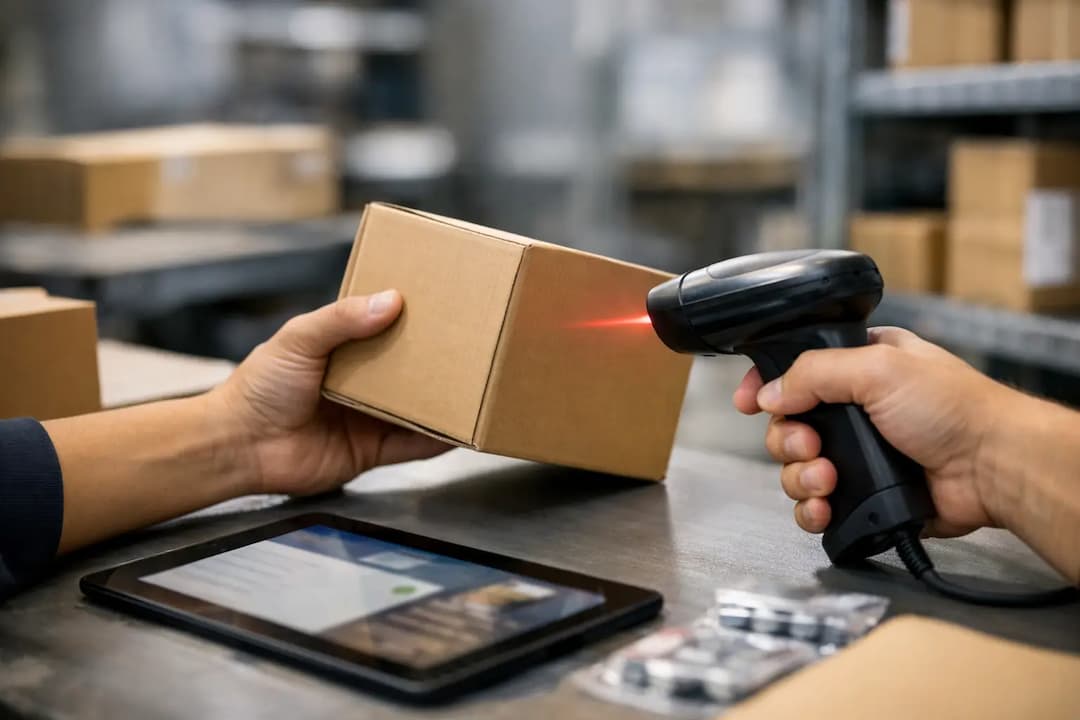
A shipment can be packed correctly, sealed correctly, and still be wrong. That is what makes sku and upc verification a high-value control point in international trade. When the product identity on the carton, the retail label, the packing list, and the commercial invoice do not align, the issue does not stay in the warehouse. It moves downstream into customs review, receiving delays, chargebacks, claims, and internal disputes over what was actually shipped.
For importers, brokers, and logistics teams, the problem is rarely just a bad barcode. The real issue is that a SKU or UPC mismatch often signals a broader identity failure inside the shipment record. If the wrong UPC is printed on packaging, the wrong item may have been labeled. If the SKU on the packing list does not match the purchase order, the supplier may have substituted product. If carton labels and export documents conflict, the cargo may clear slowly or trigger avoidable questions at destination.
What sku and upc verification actually confirms
In operational terms, sku and upc verification is the process of confirming that product identifiers match across the physical goods, their labels, and the transaction documents tied to the shipment. That sounds simple, but it only works when verification is done against the right evidence set.
A useful verification process checks whether the SKU used by the buyer matches the supplier's product reference, whether the UPC printed on unit packaging corresponds to the intended item, and whether those identifiers appear consistently on carton labels, packing lists, invoices, and other shipment records. In some programs, this also extends to country of origin markings, quantity declarations, lot references, or retailer-specific label requirements.
The purpose is not academic accuracy. It is shipment readiness. Product identity has to hold together across commercial, compliance, and logistics workflows. When it does not, each team sees a different version of the shipment. Procurement believes one item was bought, the warehouse receives another, customs documents describe something else, and the broker is left trying to reconcile inconsistencies after departure.
Why SKU and UPC verification matters before cargo leaves origin
The timing matters as much as the check itself. Verification after arrival is still useful for claims, but it does little to prevent landed cost damage. Once cargo is on the water or in the air, options narrow quickly. Rework becomes expensive, replacement inventory takes longer, and evidence gets harder to collect.
At origin, discrepancies are still actionable. A mislabeled master carton can be corrected. A substituted product can be isolated. A packing list can be revised before filing errors spread across commercial paperwork. If UPCs are duplicated, missing, or assigned to the wrong variation, that issue can be escalated while the supplier still has physical access to the goods.
This is where independent pre-shipment inspection has a clear advantage. A supplier's internal confirmation may be honest, but it is not neutral, and it may not be documented in a way that supports customs readiness or dispute resolution. An external verification process creates a record of what was observed before export, including how identifiers appeared on products, packaging, cartons, and related documents.
The risks a mismatch creates
Some SKU and UPC issues are obvious. A blue item is labeled with the UPC for the red version. A six-pack carries the barcode for a single unit. A retailer-specific SKU never appears on the shipping documentation. Those are direct errors with direct consequences.
Other cases are less visible but more serious. The UPC may scan correctly but still belong to a discontinued packaging format. The supplier's internal item code may map to multiple buyer SKUs. The carton label may reflect the correct purchase order while the invoice uses an outdated product description. Customs may not reject the entry purely because of a UPC discrepancy, but inconsistencies in product identity can increase scrutiny, slow classification review, or weaken the defensibility of the declared shipment.
For retailers and distributors, the downstream costs can be immediate. Receiving teams may quarantine inventory. EDI records may fail. Marketplace listings may not match what arrived. Chargebacks can be triggered even when the physical goods are acceptable. For customs brokers and forwarders, the problem becomes one of incomplete or conflicting source data. For importers, it becomes a risk to margin, replenishment timing, and vendor accountability.
Where verification should happen in the workflow
The best checkpoint depends on the product, packaging process, and supplier maturity. In some operations, SKU and UPC verification should happen during production, especially when packaging is printed early and product variations are easy to mix. In others, the highest-value moment is during final random inspection or immediately before loading, when the inspector can compare finished goods against the approved shipment documents.
There is no single rule that fits every sourcing program. High-SKU-count retail shipments usually need broader sampling because variation errors are common. Regulated or high-claim product categories may require tighter document matching and clearer photographic evidence. Mixed-container loads demand more discipline than single-item shipments because carton-level confusion is easier to miss.
What matters is that verification is tied to departure timing closely enough to support a decision. If the mismatch is found, can the buyer stop shipment, relabel, split the cargo, revise the documents, or accept the deviation knowingly? A control point that surfaces errors after the container is sealed has limited preventive value.
What good SKU and UPC verification looks like
A credible verification process is not just someone scanning a barcode and checking a box. It should connect observed product identity to the shipment context. That means documenting which item was checked, where the identifier appeared, which document it was compared against, and whether the finding was isolated or repeated across samples.
Photographic evidence matters because many disputes are not about whether a code existed, but where it appeared and on what packaging level. Unit packaging, inner cartons, and master cartons can all carry different identifiers. If the record does not distinguish between them, the evidence loses value. The same is true for document control. A result is only defensible if the verification references the actual packing list, invoice draft, shipping marks, or approved labeling specification tied to the shipment.
The strongest programs also preserve context around loading and condition. If the correct SKU and UPC were verified on staged goods, but different cartons were loaded later, the verification record needs to show that handoff risk. This is why evidence capture tied to product identity, packaging, and loading events is far more useful than a standalone inspection note. Previo en Origen® approaches this through documented origin inspections and structured digital evidence that can be reviewed across functions, not just by the person who requested the check.
Why suppliers still need independent verification
Many suppliers are capable and well-intentioned. That does not eliminate process drift. Packaging changes, substitute materials, late print runs, and mixed work orders create conditions where product identity errors can enter the shipment without fraud or negligence. In fast-moving factories, the question is often not whether a mistake is possible, but whether anyone independent captured proof before dispatch.
Independent verification adds discipline because it tests what is physically present against what was ordered and documented. It also creates alignment across teams that normally work from different systems. Buying teams think in SKUs. Retail systems may depend on UPCs. Brokers need invoice and packing consistency. Warehouse teams need carton-level accuracy. A shared evidence record helps those groups work from the same observed facts.
SKU and UPC verification as a customs-readiness control
Not every mismatch becomes a customs problem, but enough of them do that the check belongs inside a customs-readiness framework. Customs clearance depends on product identity being described consistently and credibly. If identifiers, descriptions, quantities, or origin-related markings conflict, the shipment becomes harder to defend.
This does not mean every UPC must appear on every customs-facing document. It means the underlying product references need to support a coherent record. When a broker, importer, or compliance manager needs to answer questions about what was shipped, they should be able to trace the item from purchase order to label to carton to invoice with confidence.
That is the practical value of sku and upc verification. It reduces ambiguity before export, when corrections are still possible and evidence is still within reach. In global trade, control is rarely created at destination. It is created earlier, by verifying the right details while the shipment is still standing still.